Charging an EV at Home: Wall Socket or Wallbox, and How Much It Costs
We look at when a regular wall socket is enough and when a wallbox is worth installing, how many hours a car takes to charge at home, and how to calculate the real cost per kilometre with a night tariff.
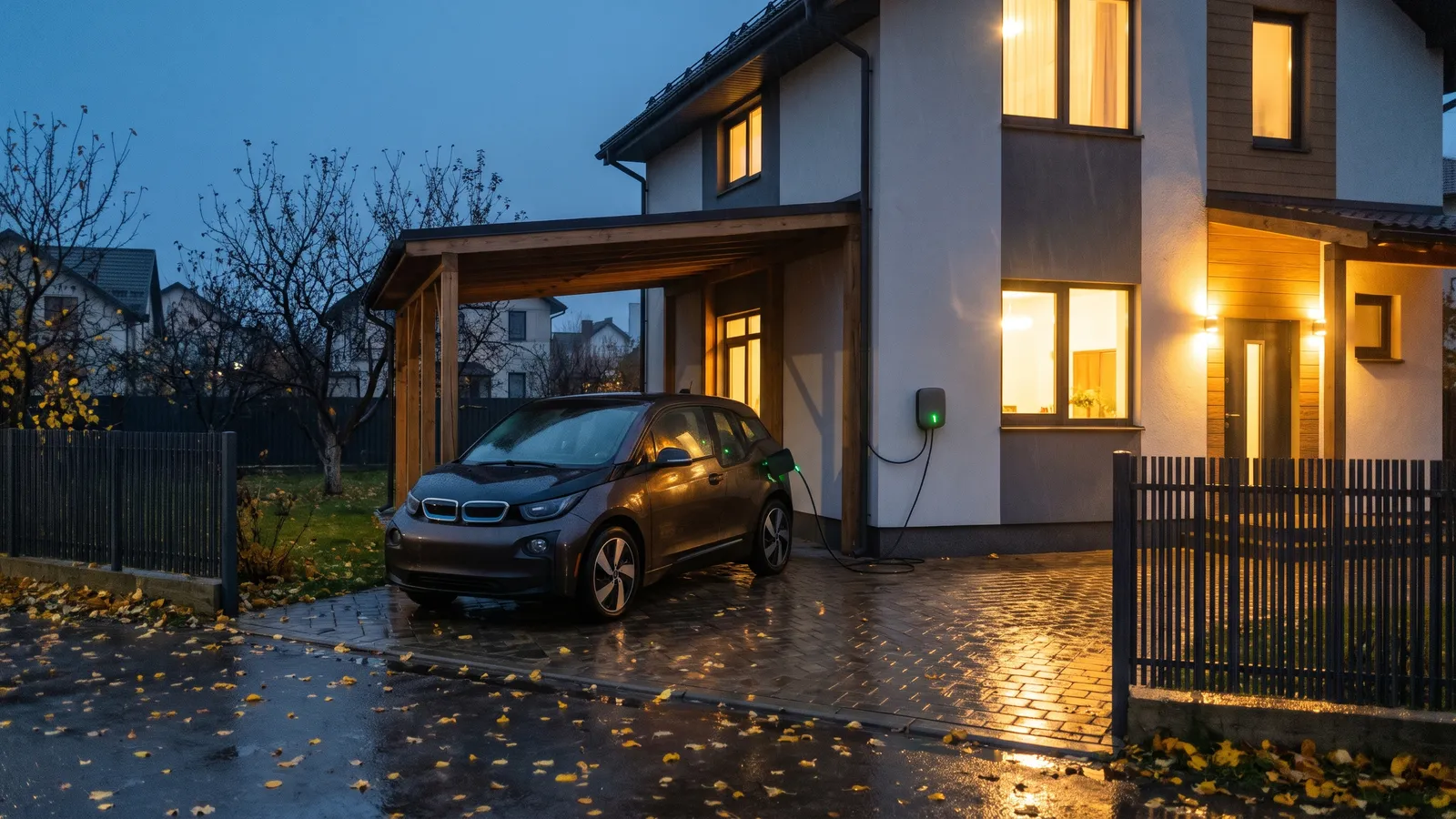
Most EV owners charge their cars not at fast-charging stations but at home — overnight, while they sleep. It's the cheapest and most convenient option: park the car, plug in the cable, and by morning you have the range you need. But before buying, the question comes up straight away: will a regular wall socket do, or do you need a wallbox, and how much will it all really cost?
Below we go through the options for a private house and an apartment, calculate charging time and the cost of 100 km, and explain how the night tariff works. No complicated formulas — just what will help you decide before the car even appears in your driveway.
Three ways to charge at home
A regular socket and a portable charger
A portable charger is a cable with a control box and a plug for a household socket. Depending on the current setting, it delivers roughly 2–3.5 kW, adding 10–18 km of range per hour of charging.
The advantage is obvious: nothing needs to be installed. The downside is that it's slow, and the socket must be in good condition, ideally on a dedicated circuit with proper earthing. A sustained load of 10–16 A for many hours is not a kettle running for three minutes: old wiring and sockets heat up, and the contacts burn out over time.
Single-phase wallbox
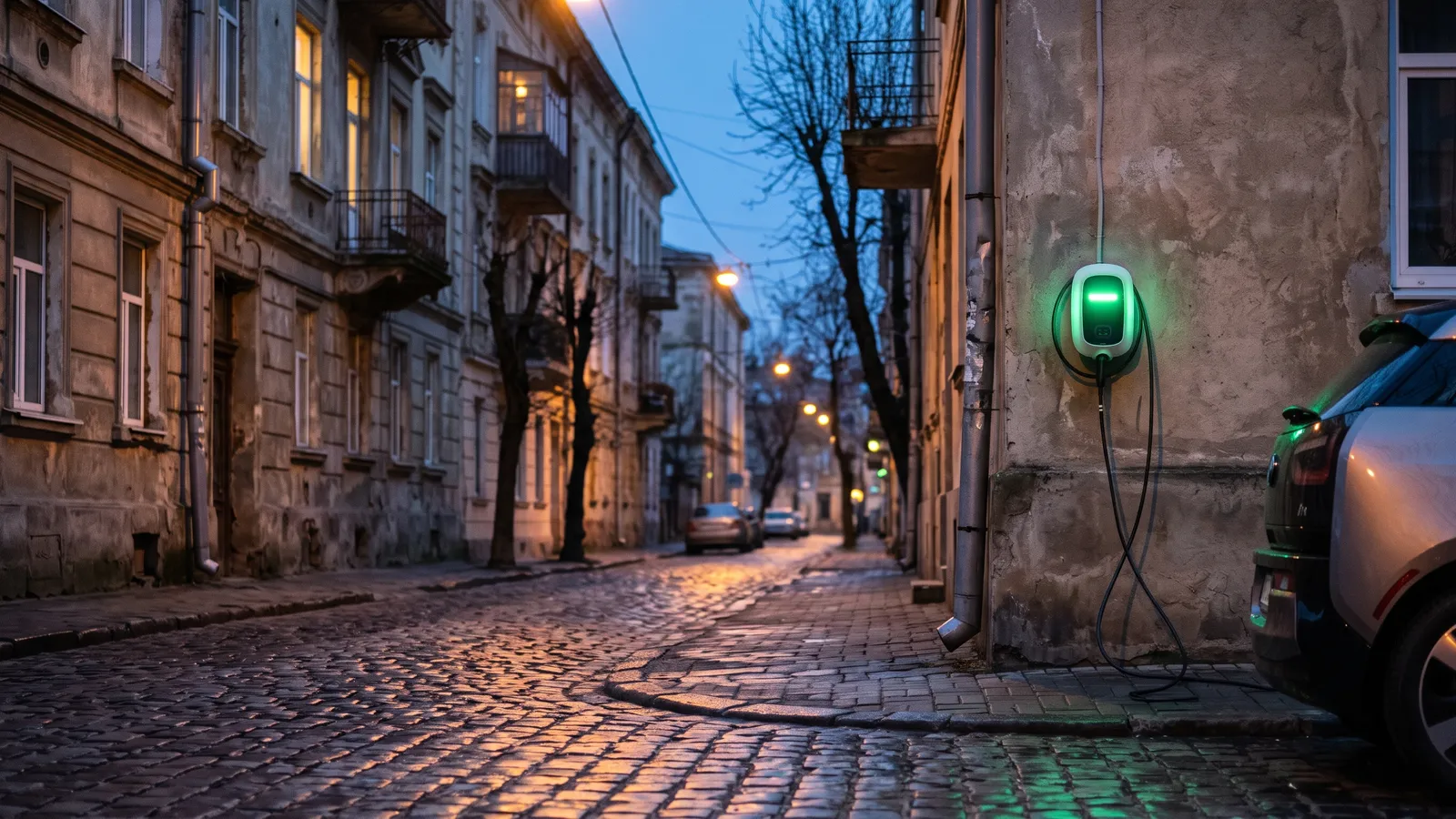
A wall-mounted 230 V charging station, most often up to 7.4 kW. That's 32–40 km of range per hour — enough to top up practically any battery on the market overnight. It suits a house with a single-phase supply, provided the permitted power can handle this load alongside other appliances.
Three-phase wallbox
Stations rated at 11 or 22 kW for three-phase supply. There's an important nuance here: how much AC power the car actually accepts is determined not by the station but by the car's on-board charger. Many models accept around 7 kW on AC, and a more powerful station won't make them charge faster. Before paying for kilowatts, find out how much your particular car can accept.
How long charging takes
The formula is simple: divide the required kWh by the charging power and add 10–15% for losses — current conversion, electronics, battery heating. Losses are higher in winter.
Take a battery of about 60 kWh charged from 20 to 80%. That's 36 kWh into the battery, or roughly 40 kWh from the grid including losses.
| Option | Power | 20→80% for a 60 kWh battery | Range per hour of charging* |
|---|---|---|---|
| Household socket | 2–2.3 kW | 17–20 h | 10–12 km |
| Portable 16 A charger | 3.5 kW | 11–12 h | 16–18 km |
| Wallbox, single-phase | 7–7.4 kW | 5.5–6 h | 32–40 km |
| Wallbox, three-phase | 11 kW** | 3.5–4 h | 50–58 km |
* Based on real-world consumption of 17–20 kWh per 100 km. ** If the car's on-board charger accepts 11 kW.
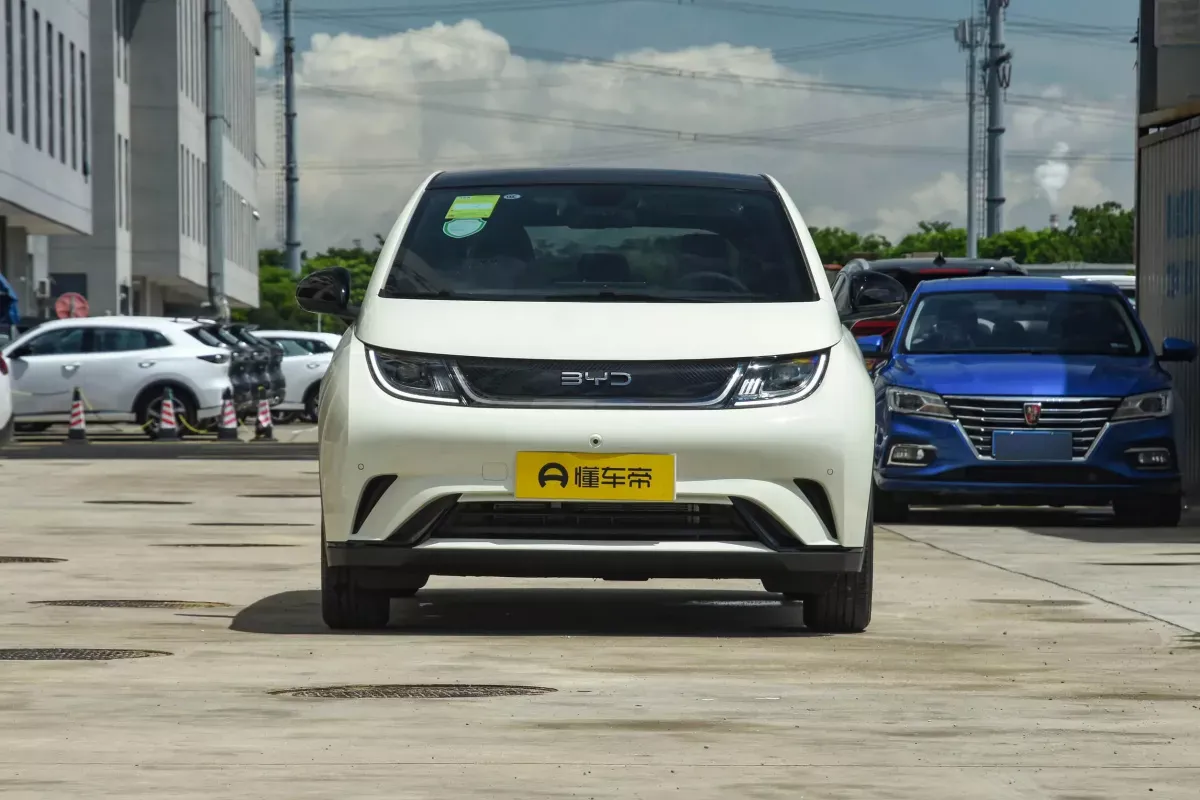
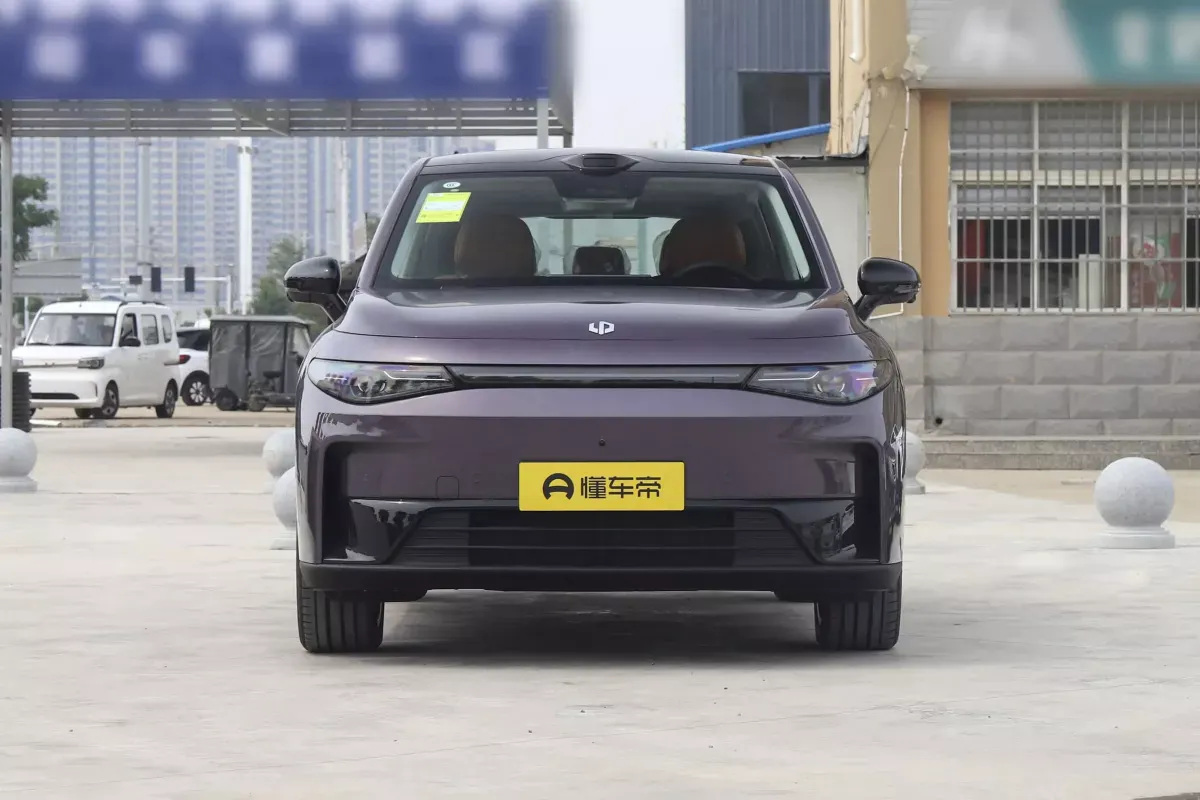
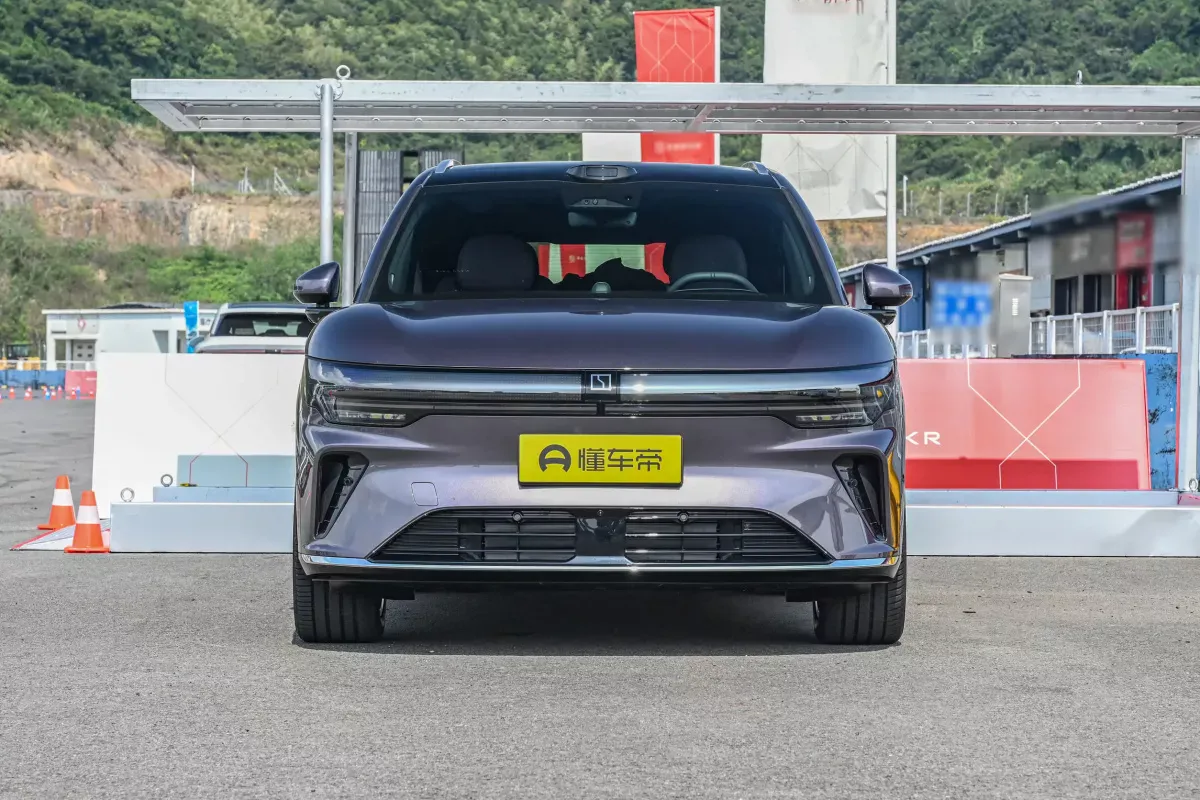
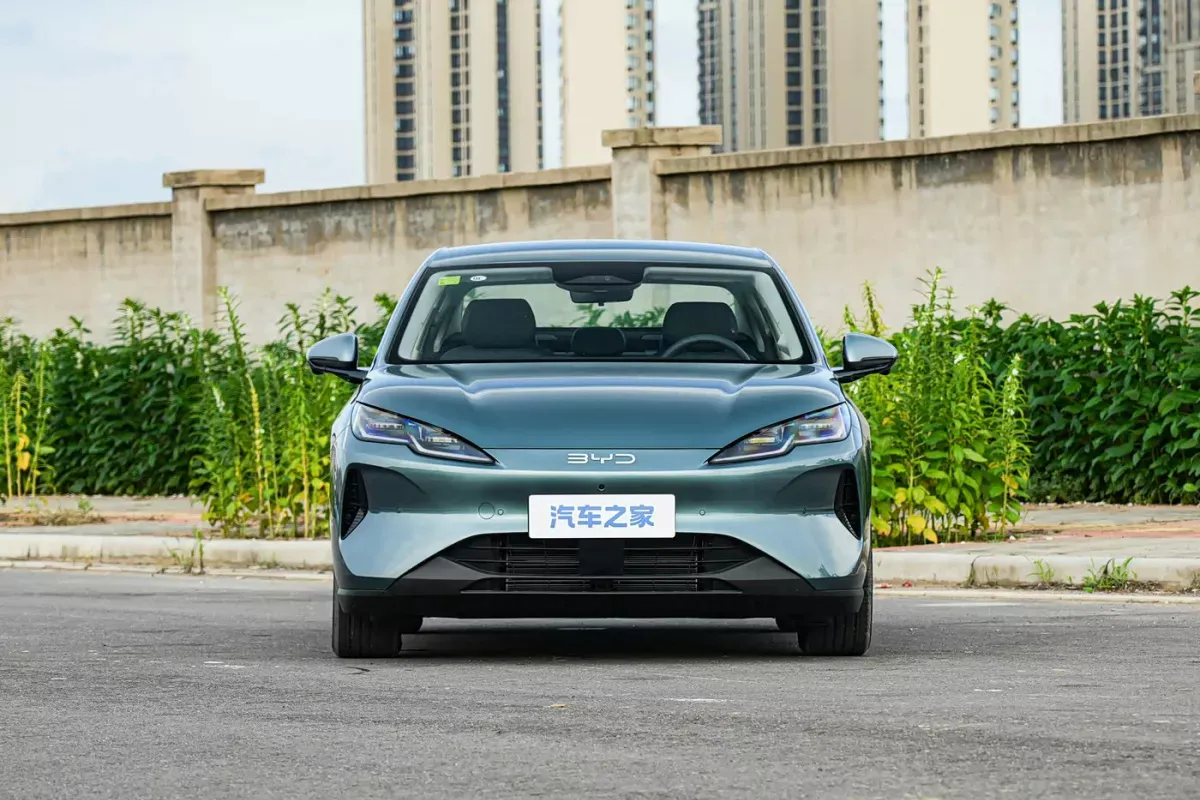
For reference, here is EV House catalogue data on slow charging. For the BYD Dolphin it's 6.44 h for the 45.1 kWh battery and 8.64 h for the 60.5 kWh one; for the Leap Motor C10, 6.1–7.5 h; for the ZEEKR 7X with a 103 kWh battery, 14.7 h. These are times at an AC charging station; from a household socket the same charge will take several times longer.
In practice, a full charge every night is rarely needed. If you drive 40–60 km a day, topping up 8–12 kWh is enough — that's 4–6 hours even from a socket. So for modest daily mileage, a socket can be a perfectly workable solution.
How to calculate the cost per kWh and per 100 km
Take the price of 1 kWh from your electricity bill. For this example we'll use a notional 4.5 UAH — substitute your current rate, as tariffs change.
- Real-world consumption of an average crossover is roughly 16–20 kWh per 100 km in summer and 20–26 kWh in winter. Compact hatchbacks use less, large all-wheel-drive models more.
- Add about 10% for charging losses: 18 kWh in the battery means roughly 20 kWh from the grid.
- Multiply by the tariff: 20 × 4.5 = 90 UAH per 100 km.
At 1,500 km a month, that comes to about 300 kWh, or roughly 1,350 UAH at the notional tariff. Compare this with what you spend on fuel for the same distance — the difference usually speaks for itself.
Remember that the range figures in catalogues are given under the CLTC cycle, which is optimistic. On the motorway and in freezing weather, real range is usually 20–35% lower, so consumption per 100 km will be higher too. We looked at how this plays out in practice in our article on EV range in winter.
Night tariff: how to charge for less
Two-zone or three-zone metering lets you pay less for electricity at night than during the day. For an EV owner it's an almost ideal scenario: the car sits idle overnight anyway, and that's exactly when it charges.
For example, if the night rate is half the day rate, the same 300 kWh a month will cost about 675 UAH instead of 1,350. Check the current coefficients and the procedure for switching to zonal metering with your electricity supplier — they may change.
- Timer in the car. Most modern EVs let you set the charging start or finish time in the menu or app.
- Wallbox schedule. Smart stations switch on according to a schedule, track the kWh consumed and let you limit the current.
- Charge limit. For daily driving, 80–90% is usually enough. For lithium iron phosphate batteries, manufacturers often recommend charging to 100% from time to time so the system displays the remaining charge more accurately — follow your car's manual.
Another advantage of charging at night is less load on your home's electrical system. In the evening the cooker, water heater and washing machine are running, while at night practically the full supply capacity is free.
Private house: what to check before installation
- Permitted power and the main circuit breaker. If the margin is small, the station together with a water heater or space heater may trip the breaker. Sometimes the permitted power has to be increased — a separate procedure with the regional power distribution company.
- A dedicated circuit from the distribution board with cable of the appropriate cross-section and its own breaker.
- Residual current protection. You need an RCD compatible with EV charging; some stations already have built-in DC leakage protection.
- Earthing. Without it, many stations simply won't start charging.
- Mounting location. A garage or carport wall, cable length to the charging port, and moisture protection for an outdoor unit.
- Connector. Cars built for the Chinese market often have a GB/T port, European ones Type 2. The station or cable is chosen to suit the specific car.
- Load balancing. A feature that automatically reduces charging current when other high-power appliances are switched on in the house.

Apartment: realistic options
The hardest situation is an apartment block without your own parking space with electricity. But even here there are options.
- A space in a parking garage. The best scenario: you can arrange a dedicated metered circuit for your station with the homeowners' association or management company. Allow time for approvals and the design.
- A garage or lock-up nearby. These often have electricity, but again the condition of the wiring and permitted power matter.
- Public stations. Slow ones at car parks near shops and offices, fast ones for a top-up in 20–40 minutes. More expensive than at home, but perfectly workable if you need to charge once or twice a week.
- Charging at work, if your employer has a station or allows you to plug in.
What you should avoid is an extension cord out of the window. A cable on the ground, moisture and household extension leads not designed for hours-long loads are a bad combination.
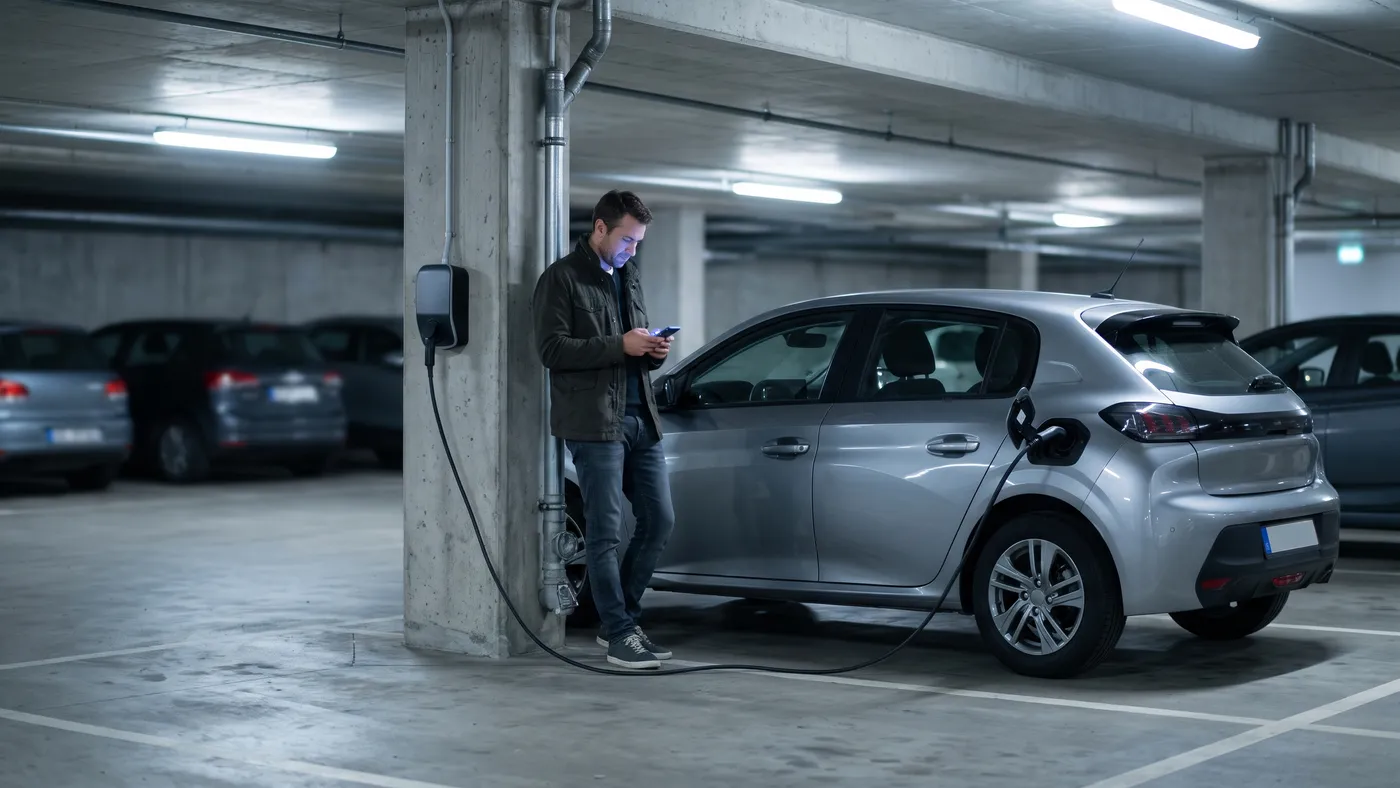
If you won't have home charging at all, consider a plug-in hybrid. For example, the BYD Seal 06 DM-i has a 25.2–34.27 kWh battery and 230–320 km of electric range under CLTC, while the Geely Starship 7 EM-i has a 19.09 kWh battery and slow charging in about 6 hours according to catalogue data. Such cars are topped up when there's a chance and run on petrol the rest of the time with no fear of running flat. More models can be found in the hybrids section.
Socket or wallbox: how to decide
- A socket is enough if your daily mileage is up to 50–70 km, you have a plug-in hybrid or a compact car, there's a sound dedicated circuit, and the car stays at home overnight.
- A single-phase wallbox — if you drive 80 km a day or more, the battery is 60–100 kWh, several family members use the car, or you want to charge only during the night zone.
- A three-phase station — if you have a three-phase supply and the car accepts 11 kW on AC, or there are two EVs in the family.
Often the optimal setup is a wallbox at home for daily use plus a portable charger in the boot for trips to relatives or the country house.
The cost of a wallbox depends on its power, smart features, cable length and the scope of installation — distance from the distribution board, the need for a new circuit, protection. So it's more honest to price not just the station itself but the whole system for your home. You can browse options in the charging stations section, and an exact quote is prepared after inspecting your electrical system.
Summary
Home charging is the main reason an EV is so cheap to run. A socket is enough for modest mileage and plug-in hybrids, a wallbox offers comfort and the certainty that the car will be ready by morning, and a night tariff noticeably cuts your bill. Our advice: before choosing a model, work out where the car will be parked overnight and what power is available to you — then choose the car and station accordingly.
If you'd like to work out your scenario with a specialist, contact EV House: we'll help you choose a car and a station and check whether your electrical system is ready for it. All contact options are on the contacts page, or call +380 66 088 93 20.
FAQ
Can I charge an EV from a regular socket every day?
Yes, if the socket is in good condition, connected to a dedicated earthed circuit, and your daily mileage is modest. Overnight, a socket can add roughly 80–120 km. Problems start with old wiring and extension cords — it's best not to use them for regular charging.
Will a 22 kW station speed up charging for any car?
No. AC charging speed is limited by the car's on-board charger. If the car accepts 7 kW, it will charge at that rate even from a 22 kW station, so first find out what your specific model can handle.
Does daily home charging harm the battery?
On the contrary, slow AC charging is the gentlest mode for the battery. For daily driving an 80–90% limit is usually enough, and detailed recommendations on full charging should be taken from your car's manual.
Will a car from China work with a station that has a European connector?
Cars for the Chinese market often have a GB/T port, while most stations in Europe use Type 2. For home charging, the station or cable is chosen to match the car's connector from the start, and certified adapters are used at public stations.
I live in an apartment without a parking space. Is an EV not for me?
Not necessarily: you can charge at public stations near home or at work if topping up once or twice a week suits you. Another alternative is a plug-in hybrid, which happily runs on petrol when there's nowhere to charge.