Electric Car Under $25,000: Real Options for the City
In a budget of up to $25,000 there are compact hatchbacks with a range of 200 to 520 km CLTC and a few trade-offs worth knowing before you buy. Let's look at what the EV House catalog offers and who such a car is really suited for.

Small electric cars are most often bought for everyday needs: parking near your entrance, commuting to work, and not visiting a gas station every week. In the EV House catalog there are several options within a $25,000 budget, and they differ noticeably: from the smallest hatchback with a 21.6 kWh battery to a five-seat crossover that goes slightly over the limit.
Below I go through specific models with figures from the catalog, the trade-offs you'll have to accept, and situations where a budget EV really makes sense. Prices in the text are given as "from" according to the EV House catalog. They may change, so please confirm the final amount with a manager.
Which models actually fit within $25,000
The cheapest item in our catalog is Leap Motor T03, from $17,300. It is a 4-seat hatchback in three versions: 200, 310 and 403 km CLTC, with a 21.6, 31.9 or 41.3 kWh battery. The 200 km version suits a city where the car covers a few dozen kilometers a day. The 403 km version gives a range that covers everyday routes without daily thoughts about a socket. Length 3,620 mm, trunk from 210 to 508 liters. Details on trims are on the T03 page.
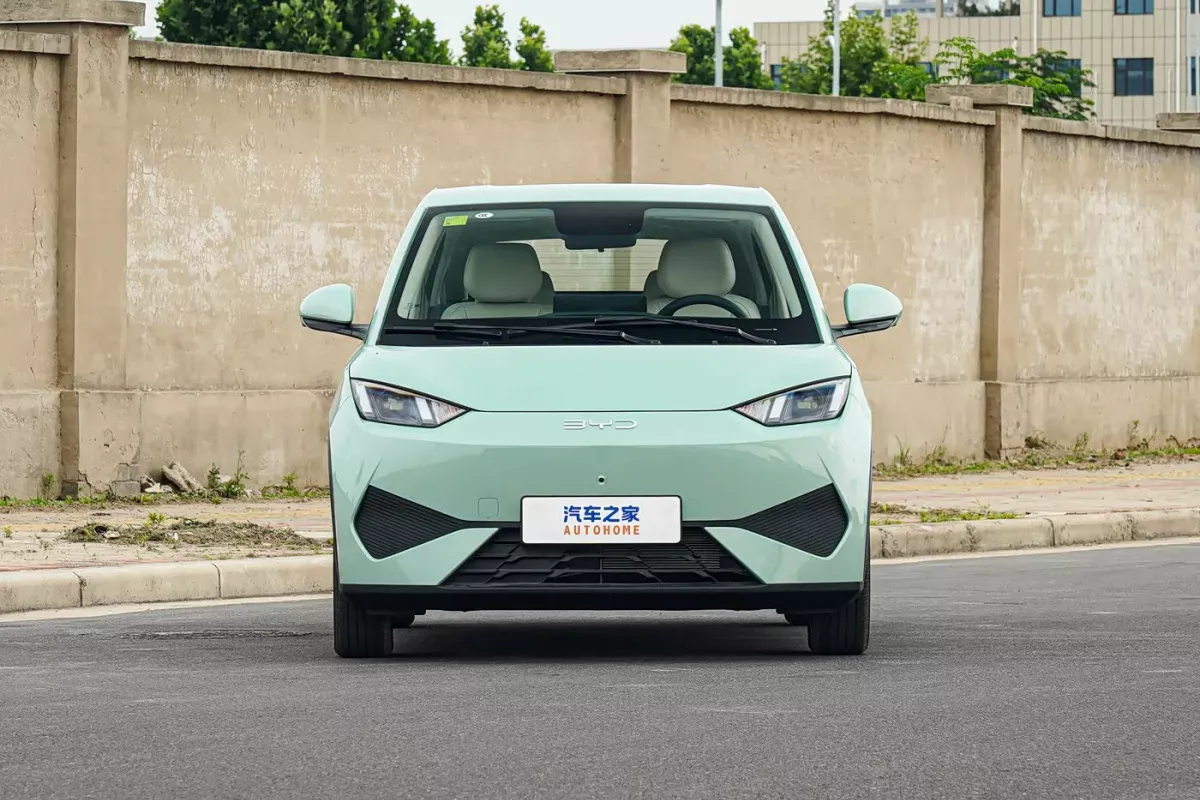
BYD Seagull starts from $19,300. In the Dynamic and Freedom versions, the 30.08 kWh battery gives 305 km CLTC, while Comfort and Flying with a 38.8 kWh battery claim 405 km. A 930-liter trunk on a car 3,780 mm long is a good result for this size. Fast charging is listed in the catalog as 0.5 hours, and battery preconditioning is available in all trims, which is very noticeable in the cold.
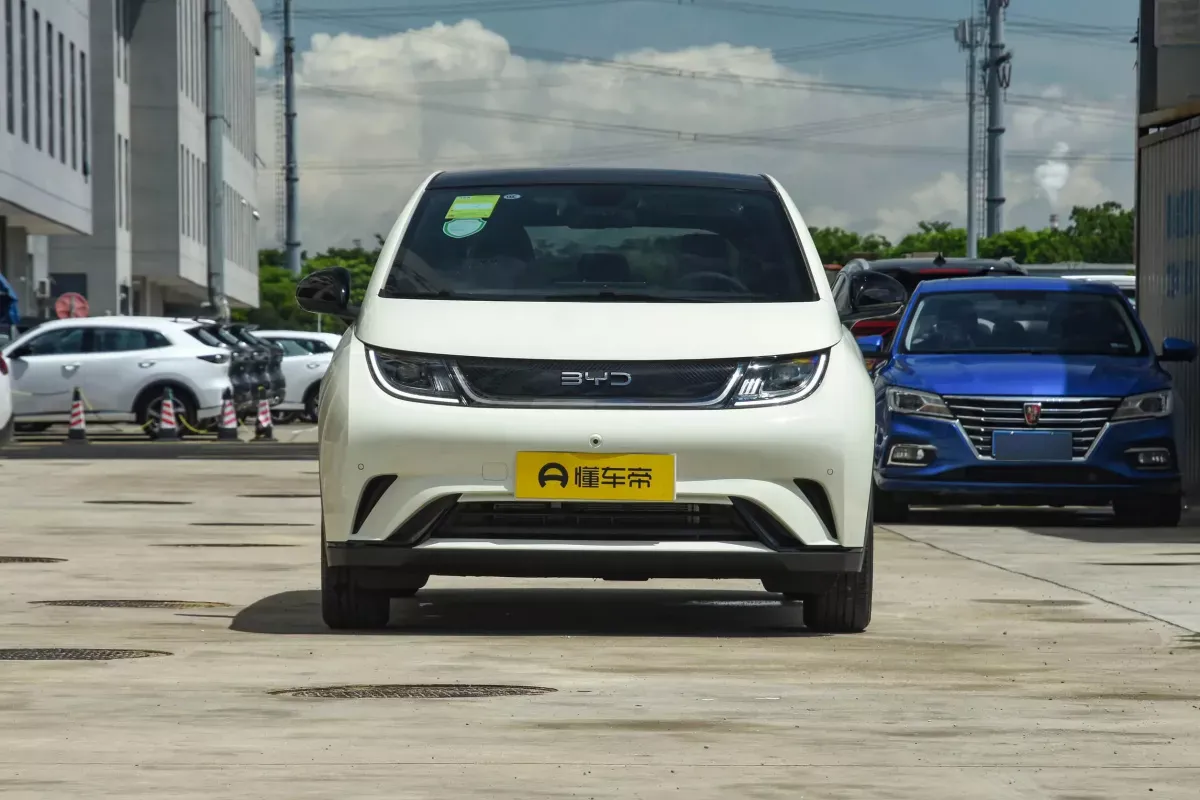
BYD Dolphin from $22,800 is a five-seat hatchback 4,280 mm long. The Free and Fashion versions have a 45.1 kWh battery and 410–420 km, while the Knight with a 60.5 kWh battery and a 150 kW (204 hp) motor claims 520 km. Trunk from 345 to 1,310 liters, so with the rear seat folded it holds quite a lot. Fast charging 0.42 hours. All trims are on the Dolphin page.
Slightly above the limit is Geely Galaxy E5, from $25,900. It is a five-seat crossover 4,615 mm long with a 60.2 or 68.39 kWh battery and a range of 530–610 km. 0–100 km/h in 6.9 seconds. If your budget allows adding a few hundred dollars, this is a different car in terms of space and performance.
| Model | From, $ (catalog) | Body | Seats | Range CLTC, km | Battery, kWh | Trunk, l | Fast charging, h |
|---|---|---|---|---|---|---|---|
| Leap Motor T03 | 17,300 | hatchback | 4 | 200–403 | 21.6–41.3 | 210–508 | 0.6 |
| BYD Seagull | 19,300 | hatchback | 4 | 305–405 | 30.08–38.8 | 930 | 0.5 |
| BYD Dolphin | 22,800 | hatchback | 5 | 410–520 | 45.1–60.5 | 345–1,310 | 0.42 |
| Geely Starship 7 EM-i (hybrid) | 24,800 | crossover | 5 | 130–135 electric, 1,505–1,510 total | 19.09 | 528–2,065 | 0.33 |
| Geely Galaxy E5 | 25,900 | crossover | 5 | 530–610 | 60.2–68.39 | 461–1,877 | 0.33 |
For the hybrid, the fast charging figure applies to its battery, while the rest of the distance is covered by the petrol engine. All "from" prices are approximate and may change along with the trim.
Trade-offs you'll have to accept
A budget electric car usually wins on simplicity and cost of ownership, but it gives up something in a few areas. Go through this list before buying:
- Range. CLTC is a laboratory cycle and it is optimistic. In real driving the range is noticeably lower, especially in winter with heating and on highways at 110–130 km/h. For the 200 km T03 this matters: the car will comfortably get you to the city and back, but there is little margin left for the unexpected.
- Equipment. The EV House catalog does not list steering wheel heating for the Seagull, T03 and Dolphin. The base Dolphin has a 70 kW (95 hp) motor, while the Knight has 150 kW (204 hp), so the difference is noticeable on hills and when overtaking. Check what is included in the version you choose.
- Class and safety on the highway. A small car with a short wheelbase feels less confident next to trucks on a fast road than a larger crossover. That is not a reason to give up the car, but factor it into your route planning.
- Fast charging. The catalog lists it at 0.33 to 0.6 hours, but without the charge level it is calculated for. For long trips, allow extra time for stops.
A word on the battery. All three budget hatchbacks have an LFP battery. It is heavier per unit of energy than NMC, but it tolerates full charges better and is usually cheaper. More on this in our article about LFP and NMC.
Charging: when a socket is enough
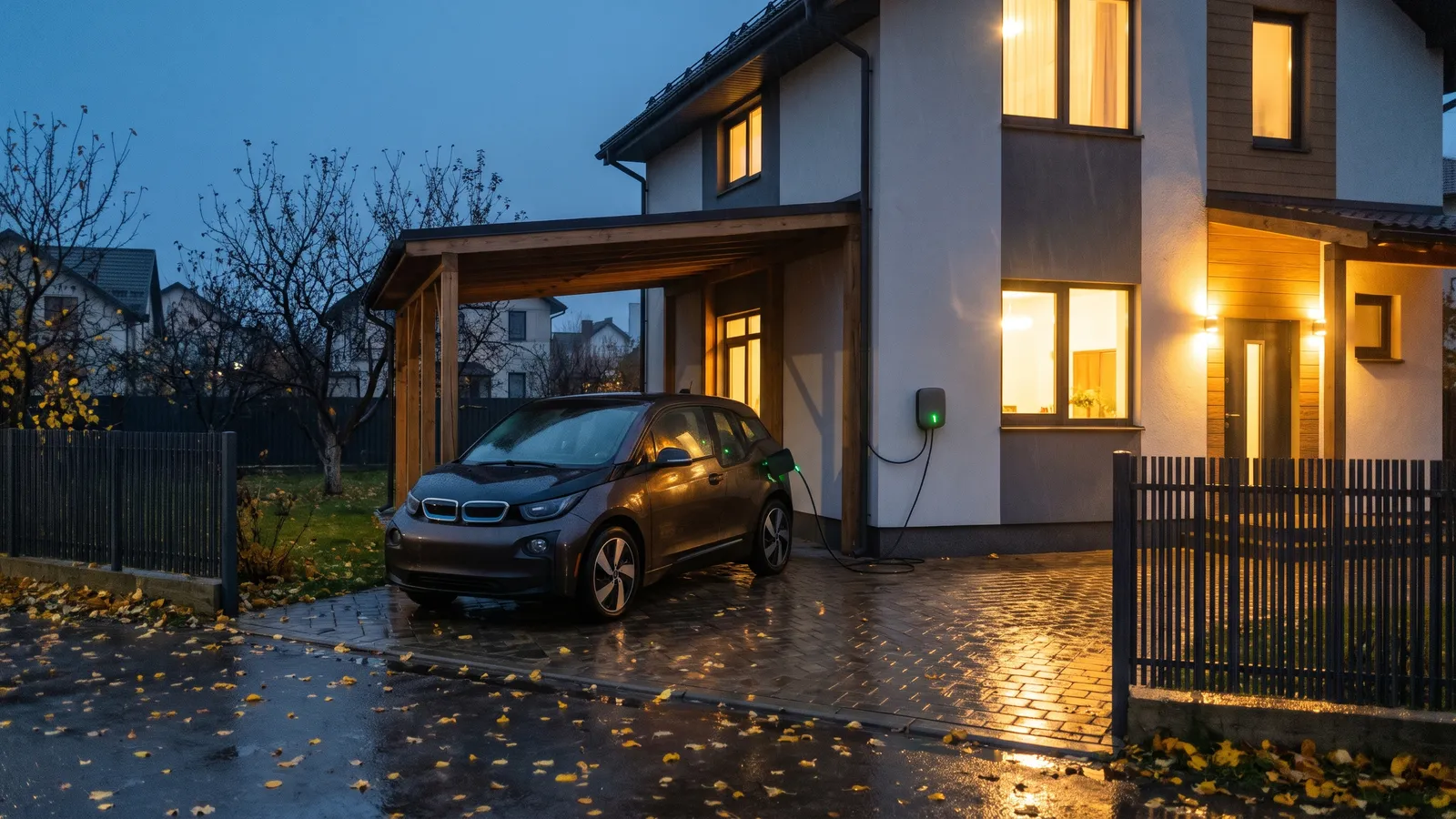
For a small EV the main question is not how far it goes on one trip, but where it charges every night. A standard 220 V socket provides roughly 2–3.5 kW. A 30 kWh battery takes about 9–14 hours to charge from empty to full, including losses. For the Dolphin with a 45.1 kWh battery, that is 13–20 hours. If you drive 30–50 km a day, an overnight socket will replenish what you used without problems. If you need to charge every day with higher mileage, a wallbox becomes a practical necessity. The difference between a socket and a wallbox, and their costs, is covered in a separate article.
DC fast chargers are needed mostly on the road. In the catalog, fast charging for small models takes 0.33 to 0.6 hours, roughly 20 to 36 minutes, but in winter these figures are usually longer. How winter affects charging and range is explained in our article on winter range.
Who a small EV suits
A small electric car works when its use case matches real life. Most often these are the following situations:
- City and short distances. You commute to work, go to shops and to the doctor within the city, and cover 30–60 km a day. Both the T03 and the Seagull are enough for this scenario, and a range of 300 km or more gives a reserve for unexpected routes.
- You have your own charging spot. A garage, a parking space with a socket, or charging at work. Without this, a small EV loses its main advantage, which is refueling at home every morning.
- A second car in the family. If two adults are enough for city trips and a large crossover is kept for long routes, a hatchback is a perfectly logical choice.
- A first electric car. A modest budget and a simple use case let you learn how you charge, plan stops and how much energy you actually use.
A small EV won't suit you if you often drive more than 300 km one way on the highway, regularly carry four adults with luggage, or cannot charge at home. In such cases it is worth stretching the budget to a crossover or looking at a hybrid.
A hybrid if there is no socket
Geely Starship 7 EM-i from $24,800 is a five-seat crossover that covers city driving without charging. The 19.09 kWh battery gives 130–135 km of electric driving CLTC, and the total range according to the catalog is 1,505–1,510 km. Fuel consumption 4.5–4.7 l/100 km WLTC, 51-liter tank. For someone who drives in the city daily and has nowhere to charge, this is a clear compromise. It also has a different character: a petrol engine, a fuel tank, and different habits at the pump. The difference between a plug-in hybrid and an EREV and real consumption should be checked separately, because almost everything depends on charging.
What to choose to start with
If your budget is up to $25,000 and your trips are mostly in the city, the simplest choice is the Seagull or the Dolphin. The Seagull is cheaper and has a 930-liter trunk, the Dolphin offers more range and the option of a 60.5 kWh battery. The Leap Motor T03 is the most affordable option, but choose the 310 or 403 km version, otherwise range will be a limitation. A hybrid makes sense when there is no charging at all. Before buying, calculate your trips for a week, check where the car will be parked overnight, and ask us for a calculation for a specific trim. If you are considering a used car, battery checks before the deal are also part of our work. Write or call: +380 66 088 93 20.
FAQ
Is it really possible to buy a new electric car for under $25,000 at EV House?
Yes. According to the catalog, three models cost from $17,300 to $22,800, while the Geely Galaxy E5 starts from $25,900, slightly above the budget. Prices are given as "from" and may vary depending on the trim, so it is best to confirm the exact amount, including delivery and paperwork, with a manager.
How far will a small electric car go on one charge in winter?
The stated CLTC range is optimistic, and in winter it is noticeably lower due to the cold battery and cabin heating. For city trips, expect a range several tens of percent below the stated figure, and for highway trips plan for an even larger margin. More about winter range is in a separate article on our blog.
Do I need a wallbox for an electric car with a 30 kWh battery?
Not necessarily, if the car is parked next to a socket and you drive up to 50 km a day: overnight charging replenishes what you used. A wallbox is more convenient and faster than a standard 220 V socket, and it is worth installing if you need to charge daily with higher mileage. Costs and options are described in our article on home charging.
How is the Geely Starship 7 EM-i hybrid different from a small electric car?
It has a 19.09 kWh battery, 130–135 km of electric range CLTC, and a petrol engine for longer trips. This removes the charging concern, but you use a fuel tank and filling stations, and the engine adds habits and maintenance. For city dwellers without their own socket, this option is convenient.